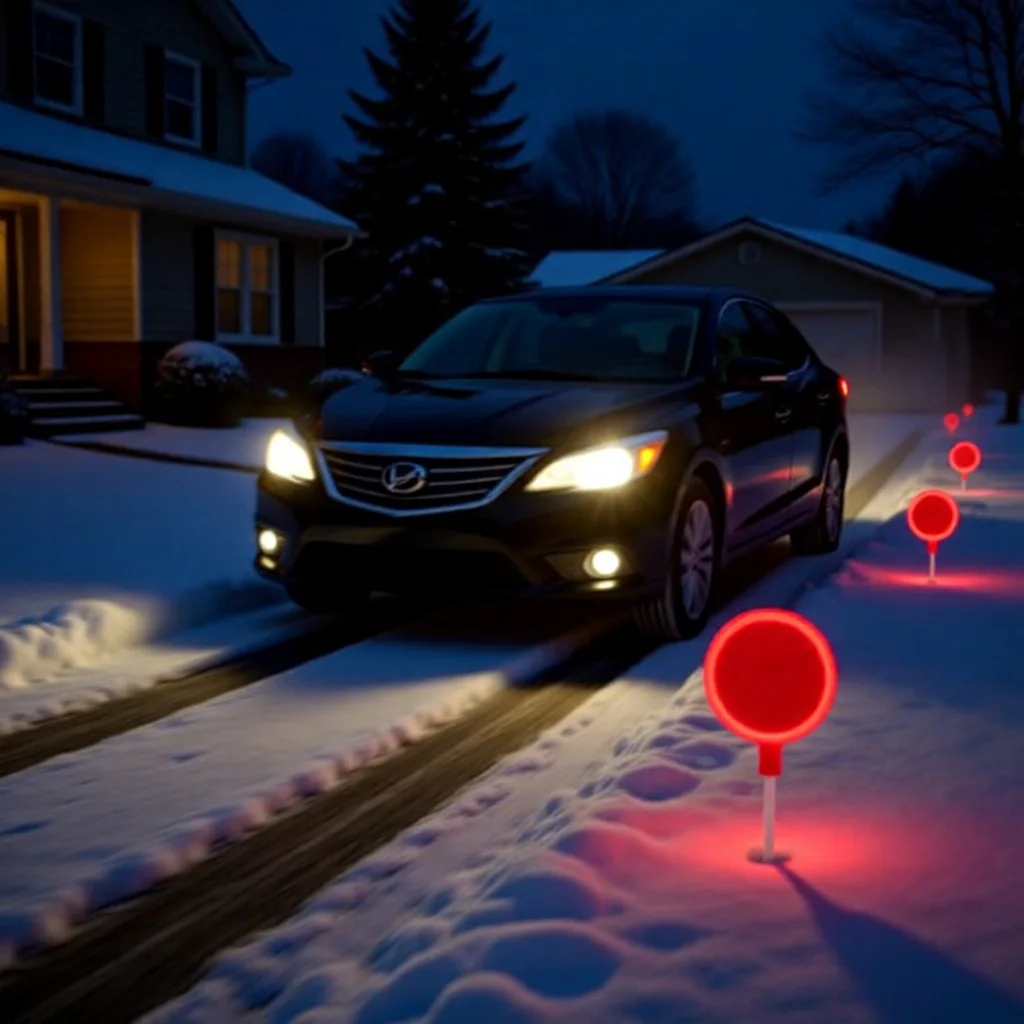
Where to place solar driveway markers
Balance sunlight, visibility, mounting suitability, and access for cleaning before choosing positions.
As an Amazon Associate I earn from qualifying purchases. This guide does not represent hands-on product testing.

A solar marker needs a location that serves two purposes: it must be visible where needed and receive suitable sunlight for charging. A neat-looking row beside a shaded hedge may satisfy neither goal in winter. Review the property's changing conditions before committing to permanent mounts.
Observe the available sunlight
Check the proposed locations at different times of day. Buildings, trees, fences, and parked vehicles can shade a low panel. Consider seasonal changes in the sun's position and whether snow accumulates over the panel or in front of the lens.
Read the product's charging requirements and runtime conditions. Do not assume that every unit in a long row will receive the same exposure. A consistently shaded section may require a different lighting approach rather than more of the same solar marker.
Define what the light is meant to show
An edge marker can indicate a boundary without illuminating the whole driving or walking surface. If the purpose is seeing steps or uneven ground, choose lighting designed for that task. Consider glare and whether a bright unit points toward approaching drivers or neighboring windows.
Keep the layout understandable. Use positions that clarify the route rather than creating a decorative pattern that leads toward a soft edge or obstacle. Verify visibility in both travel directions where relevant.
Check mounting and equipment exposure
Confirm whether the product is intended for a stake, a hard surface, or another mount. Follow the installation instructions for the exact surface and conditions. A load-bearing claim needs to apply to the actual model; do not assume that a flat marker can be driven over.
Avoid snowblade paths and places where shovels, mower wheels, or sweeping equipment will repeatedly strike the fitting. Ground penetration still requires appropriate utility-location planning. Surface mounting may require a specified cure time before the installation is put into use.
Leave room for maintenance
Choose positions you can reach to clean the panel and lens, inspect attachments, and service the battery when the design permits it. Do not place a maintenance-dependent unit where access means standing in a live traffic route or climbing an unstable bank.
A small trial installation can show whether the proposed locations charge adequately under representative conditions. A successful summer trial does not establish identical winter performance, so keep that limitation in mind when judging the result.
Read solar lights vs. reflectors before selecting a type and solar markers in winter when planning for colder months.
Ready to compare your options?
Check the current listing for dimensions, pack quantity, mounting instructions, and availability before ordering.
Browse on Amazon