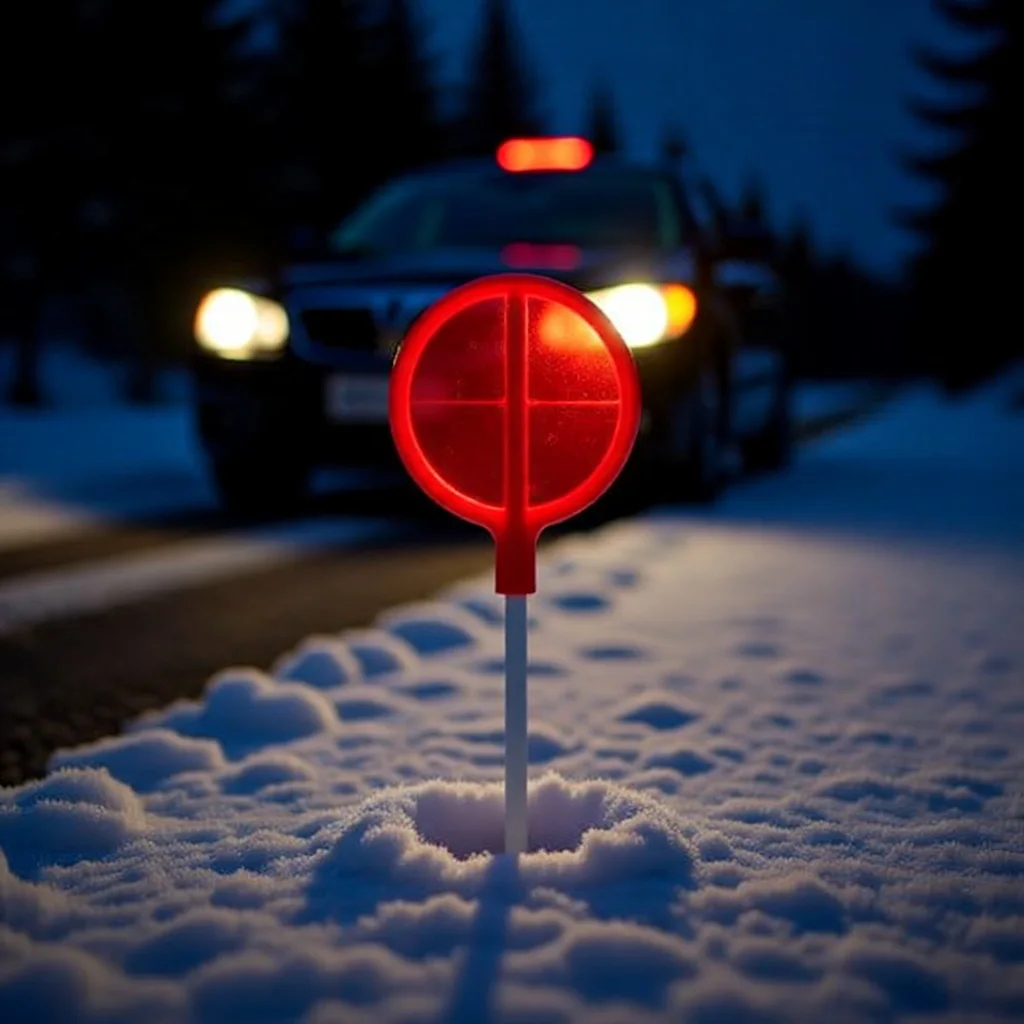
Why driveway reflectors can be hard to see at night
Check direction, obstruction, dirt, and the driving approach before replacing every marker.
As an Amazon Associate I earn from qualifying purchases. This guide does not represent hands-on product testing.

A reflector that looks bright up close may be difficult to recognize on the actual approach. Before buying a replacement set, separate a visibility problem from a placement problem. Observe from a safe location; do not stand in a traffic path or attempt adjustments while a vehicle is moving nearby.
Check whether light reaches the reflector
Passive reflectors need incoming light. If foliage, a snowbank, a parked vehicle, or another object blocks that light, the reflector cannot perform as intended. A marker installed behind a low wall may look clear from the house but be hidden from a driver's approach.
Remember that a reflector does not produce its own light. If your goal is to make a path visible when no headlights are present, consider appropriate lighting instead. The solar-versus-reflector guide explains the distinction.
Check the viewing direction
Look at the direction of the reflective face in relation to entering and exiting vehicles. A stake can rotate or lean after installation. Curved approaches may need a different orientation from straight sections, and one-sided reflectors may not serve both directions.
Do not rely only on a phone-flash photograph. Its camera and light position can differ from a driver's view. Compare the actual approach consistently, without entering a public road or creating a distraction.
Inspect the surface and mounting
Look for mud, road film, snow, frost, damaged reflective material, or a missing reflector head. Clean according to the manufacturer's instructions. Avoid abrasive cleaners or solvents unless specifically allowed; cleaning that damages the reflective surface defeats the purpose.
Check that the marker remains stable and at its intended height. A stake pushed down during maintenance may have its reflector hidden by vegetation or snow. Resolve the cause of movement before repeatedly resetting it.
Reduce confusing visual clutter
A driver may see many bright objects without understanding the driveway's path. Check whether the markers consistently indicate the same edge or whether a few misplaced units point toward an unsuitable shoulder. Nearby signs and decorative lights may compete for attention.
Correct the layout rather than adding more markers at random. For plowed driveways, discuss changes with the contractor so the markers continue to represent the agreed route.
Replace when the component is damaged
If cleaning and correct placement do not resolve the problem, inspect the product condition and instructions. Replace damaged components with compatible parts or replace the marker. Keep expectations realistic: weather and visibility conditions can still limit what a driver sees.
Use the maintenance checklist to make these checks routine.
Ready to compare your options?
Check the current listing for dimensions, pack quantity, mounting instructions, and availability before ordering.
Browse on Amazon